
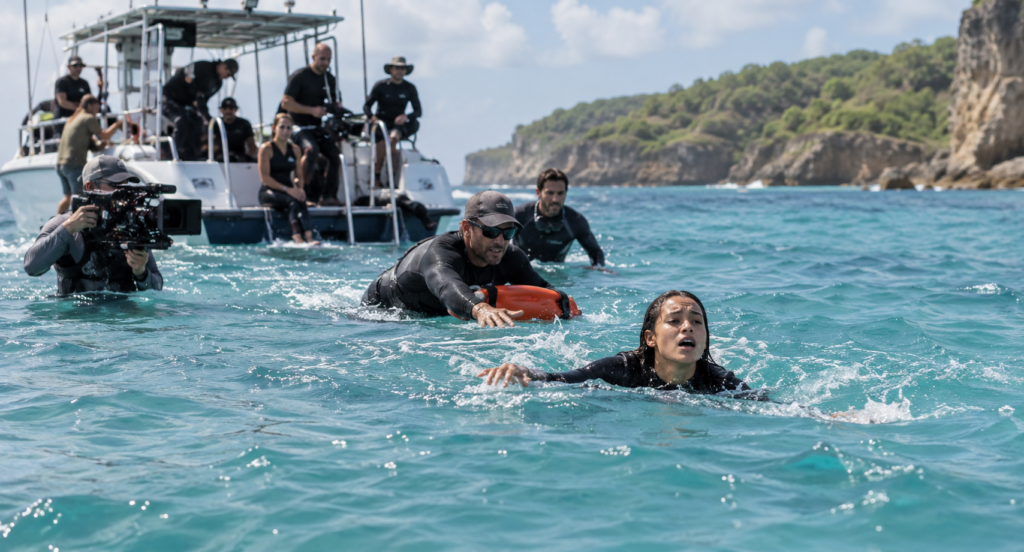
Madison Bailey’s frightening near-drowning incident while filming Outer Banks has become one of the most talked-about behind-the-scenes celebrity accident stories following the release of the show’s fifth and final season. During an interview with Entertainment Weekly, Bailey and co-star Chase Stokes revealed that an underwater sequence filmed in Barbados became a genuine emergency when Bailey struggled to remain above water.
The incident attracted renewed attention because the scene was supposed to be part of a dramatic television production. Instead, Bailey found herself in real danger, and Stokes eventually recognized that what was happening was not acting. He entered the water and helped her get back to safety.
What Happened to Madison Bailey?
Bailey and Stokes discussed the incident in an Entertainment Weekly interview published in August 2026. The actors were reflecting on their experiences filming the final season of Outer Banks, including some of the demanding underwater sequences used throughout the series.
According to their account, the cast was filming in Barbados for a scene involving Bailey’s character, Kiara, holding an unconscious character above the water. Bailey and other performers had been treading water before the scene began. Communication was difficult because the performers were in the water and the production was continuing around them.
Stokes eventually noticed that he could no longer see Bailey’s face. He realized that something was wrong and jumped from the boat to help her. Bailey later confirmed that she had been unable to breathe properly and could not swim back toward the boat on her own.
E! Online’s report describes Stokes’ account of recognizing that Bailey was in genuine distress rather than simply performing for the cameras.
When a Scripted Scene Becomes a Real Emergency
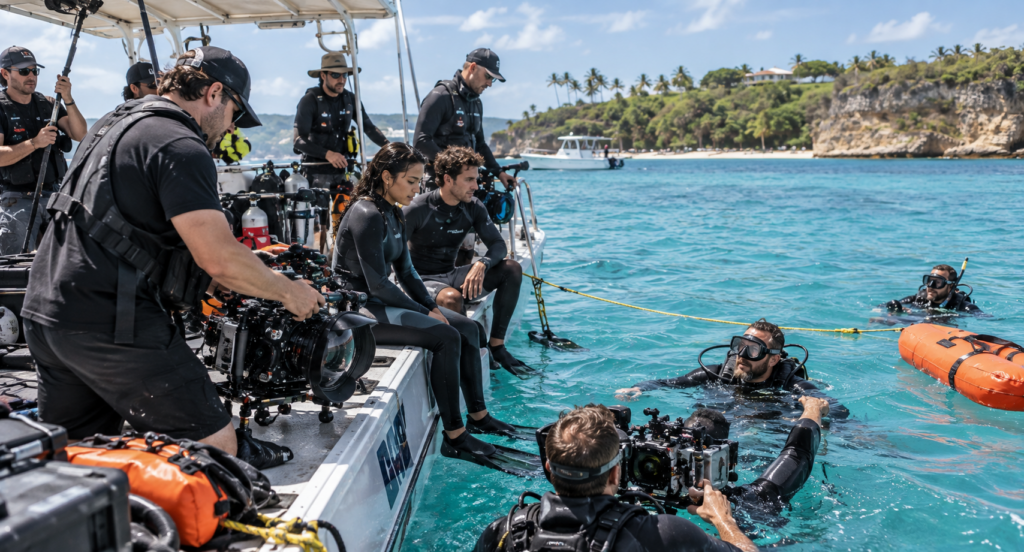
Film and television productions regularly recreate dangerous situations that would be difficult or impossible to perform safely without specialized planning. Water scenes can be particularly challenging because actors must coordinate movement, breathing, equipment, cameras, boats, and other performers while dealing with changing conditions.
The danger can increase when an actor’s real distress resembles part of the performance. In Bailey’s case, Stokes explained that people around the scene initially believed the struggle was part of the acting. That misunderstanding created an especially important safety issue because a genuine emergency can be difficult to recognize when everyone expects unusual movements as part of the scene.
SAG-AFTRA safety guidance emphasizes the importance of understanding the conditions of the body of water being used for production and having appropriate safety planning for potentially hazardous activities. Its industry safety materials also address water sequences, stunts, special effects, and emergency procedures.
Why Underwater Filming Can Be So Difficult
Bailey described underwater work as one of the hardest aspects of filming Outer Banks. That observation provides useful context for understanding why water-based production scenes require extensive preparation.
An actor working in water may have to concentrate on performing while also controlling breathing, maintaining body position, following choreography, and interacting with other performers. Cameras and other production equipment can further complicate movement and communication.
Unlike a normal conversation on a soundstage, communication underwater can be limited. Verbal communication may be impossible, while hand signals or other predetermined methods may not always be immediately visible. This makes advance safety planning especially important.
Chase Stokes Recognized the Warning Signs
The most important moment in the incident came when Stokes realized that Bailey was not simply performing. He noticed that he could no longer see her face and became concerned that she had been underwater for too long.
He then entered the water and helped her. Bailey explained that she could not swim back toward the boat, making Stokes’ intervention particularly important.
People reported on the actors’ account and described Bailey’s difficulty staying afloat during the underwater sequence. The story illustrates how quickly an apparently controlled production environment can change when an actor experiences genuine physical distress.
What Production Safety Procedures Matter?
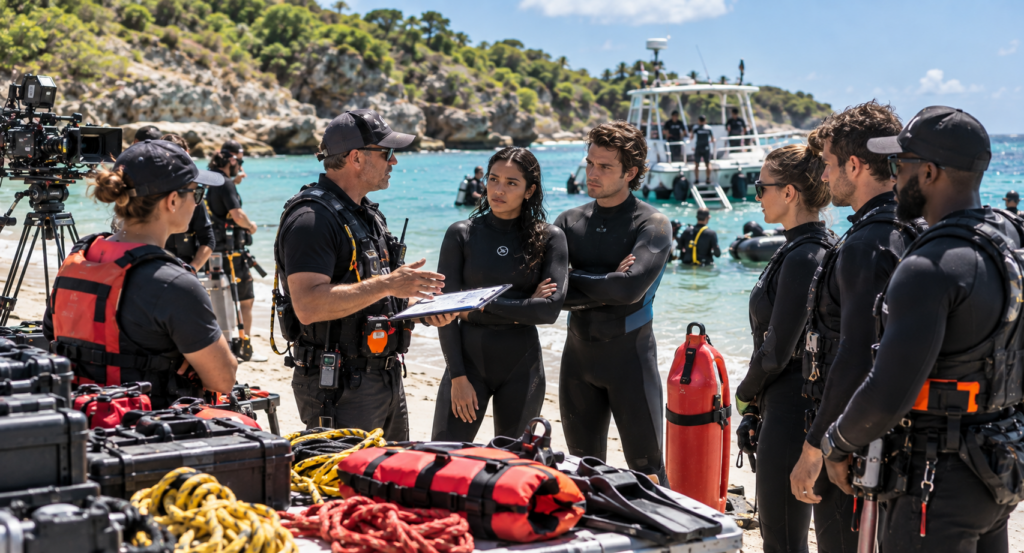
A professional production involving water should consider the location, weather, water conditions, performer abilities, emergency access, communication methods, rescue equipment, and the responsibilities of the safety personnel assigned to the sequence.
SAG-AFTRA has emphasized that safety concerns involving water work should be taken seriously. Its guidance specifically identifies location-based concerns, water quality, weather restrictions, and stunt-related safety issues as matters that deserve attention on productions.
For productions involving underwater work, the safety plan may also need to account for how performers communicate when they cannot speak. A clear signal for stopping the scene can be particularly important because an actor who is struggling to breathe may not be able to verbally call for help.
SAG-AFTRA’s on-set safety guidance states that safety concerns should be reported and specifically mentions water quality and water-related production hazards.
The Broader Risk of Drowning During Water Activities
Bailey’s experience also connects to a much broader public safety issue. Drowning can happen quickly and does not always look like the dramatic struggle portrayed in movies and television.
The Centers for Disease Control and Prevention describes drowning as a process involving respiratory impairment caused by submersion or immersion in liquid. The agency emphasizes that drowning is preventable and can happen to anyone with access to water.
The CDC also recommends understanding water conditions, using appropriate safety equipment, and taking precautions around natural water. Its guidance emphasizes that drowning can occur rapidly and may be difficult to recognize.
Could an On-Set Water Accident Raise Legal Questions?
When an actor is injured or placed in danger during a production, questions about responsibility can potentially arise. However, whether a particular incident creates a legal claim depends on the facts and applicable law.
Potential issues could include whether appropriate safety procedures were followed, whether qualified safety personnel were present, whether the performers received adequate information about the risks, and whether the production created conditions that unnecessarily increased the danger.
Contracts and union agreements can also matter. The legal analysis may depend on the relationship between the performer, production company, contractors, stunt personnel, location operators, and other parties involved in a particular sequence.
There is no public information establishing that Bailey filed a lawsuit over the incident. The available reporting instead focuses on the frightening experience and Stokes’ intervention.
How This Incident Compares With Other Celebrity Accidents
Celebrity accidents often receive unusual attention because audiences see the people involved as performers first and real people second. Behind-the-scenes accidents can be particularly surprising because viewers may assume that every dangerous-looking moment on television is carefully controlled.
CelebrityAccidents.com has previously examined other incidents involving public figures and physical injuries. Our coverage of Lindsey Vonn’s Olympic crash and recovery explores the risks associated with elite athletic competition, while our article on Shailene Woodley’s surfing accident and recovery looks at the dangers associated with recreational water activities.
These incidents are different from Bailey’s experience, but they share an important theme: activities that appear routine or controlled can become dangerous very quickly.
Why the Story Is Trending Now
The timing of Bailey and Stokes’ revelation helped push the story back into the spotlight. The fifth and final season of Outer Banks arrived on Netflix in August 2026, bringing renewed attention to the cast and the production experiences behind the series.
Netflix Tudum’s interview with Madison Bailey was published around the release of the final season and provides additional context about Bailey’s experience with the show and her role as Kiara.
The near-drowning story has therefore reached audiences at a moment when interest in the cast is already high. What might otherwise have remained an old behind-the-scenes production story has become a widely discussed example of the risks performers can face while filming physically demanding scenes.
What This Incident Teaches About On-Set Safety
The most important lesson is that realistic performances can sometimes create real risks. A production may have rehearsed a sequence repeatedly, but physical conditions can change once filming begins.
Water conditions, fatigue, equipment, communication difficulties, and the physical demands of performing can all affect a scene. A safety plan must therefore account not only for the scripted action but also for what happens when something unexpected occurs.
Another important lesson is the value of recognizing when a performer is no longer acting. Stokes’ decision to intervene demonstrates why people working around hazardous sequences need to remain alert to unexpected changes.
For more information about drowning prevention and water safety, the CDC’s drowning prevention resources provide evidence-based information about reducing risks around water.
Final Thoughts
Madison Bailey’s near-drowning while filming Outer Banks provides a sobering reminder that dangerous-looking television scenes can involve genuine physical risks. The incident occurred during underwater filming in Barbados, where Bailey struggled to remain above water while performing a demanding sequence.
Chase Stokes recognized that Bailey was in real distress and entered the water to help her. Their account has attracted widespread attention because it shows how quickly a carefully planned production can turn into an emergency.
The story also highlights the importance of water safety professionals, clear communication, emergency planning, and the ability to stop a scene when something goes wrong. For performers, crew members, and audiences alike, it is a reminder that safety must remain a priority even when cameras are rolling.
For additional coverage of celebrity accidents, injuries, and the legal issues surrounding high-profile incidents, visit CelebrityAccidents.com.