
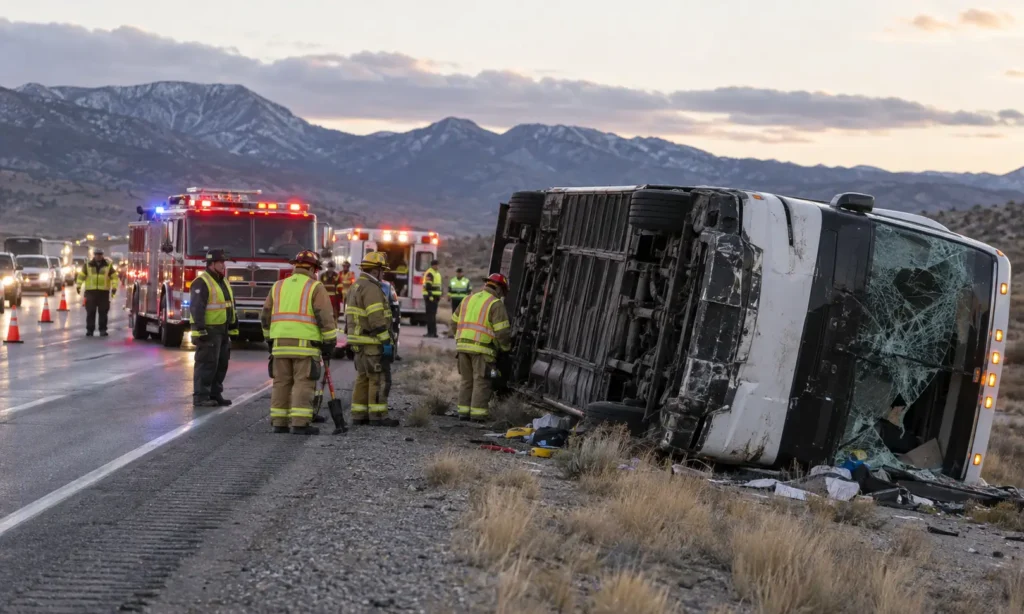
Singer-songwriter Sawyer Hill has postponed the remainder of his North American tour after a deadly tour bus crash near the Colorado-Wyoming border on October 14, 2026. The overnight rollover killed driver David Rollingcloud Jackson, 50, and injured four passengers. Hill was aboard the vehicle and described the experience as terrifying. His announcement has drawn attention to the loss of a touring industry professional, the injuries suffered by his team, and the safety questions that follow a major road accident.
The Sawyer Hill tour bus crash also raises an important distinction: a tragic result does not automatically establish negligence. Investigators have reported a possible medical factor, while Jackson’s family has offered additional information about what may have occurred before the vehicle left the roadway. Here is what has been confirmed, what remains uncertain, and what the incident means for concert travel.
What Happened in the Sawyer Hill Tour Bus Crash?
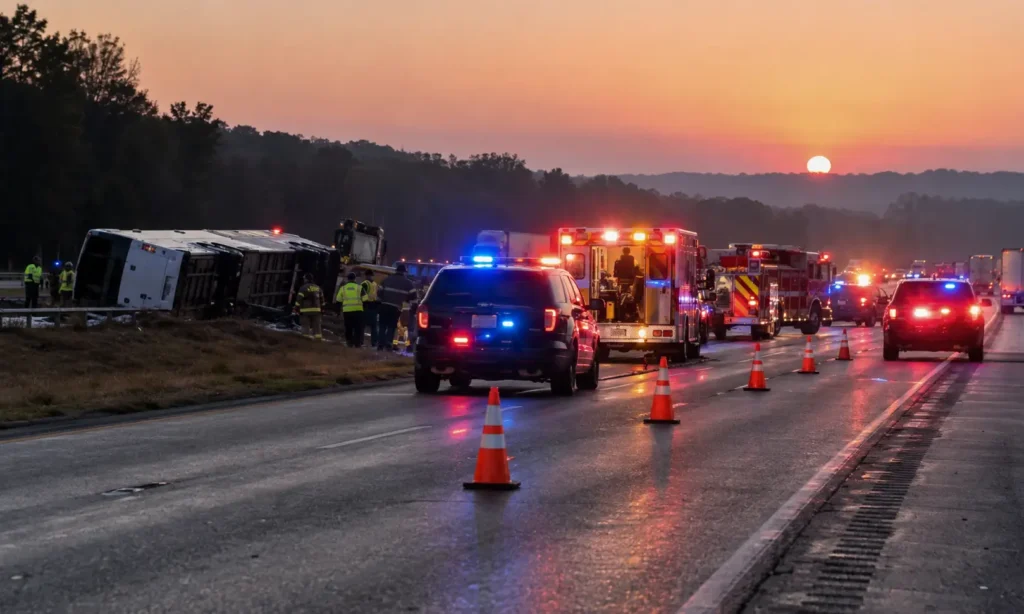
The crash occurred at approximately 2:20 a.m. on October 14 on Interstate 25 in Laramie County, Wyoming, several miles north of the Colorado border. The bus was traveling northbound after Hill’s performance at Denver’s Bluebird Theater on October 13. The touring party had been scheduled to perform in Salt Lake City later on October 14.
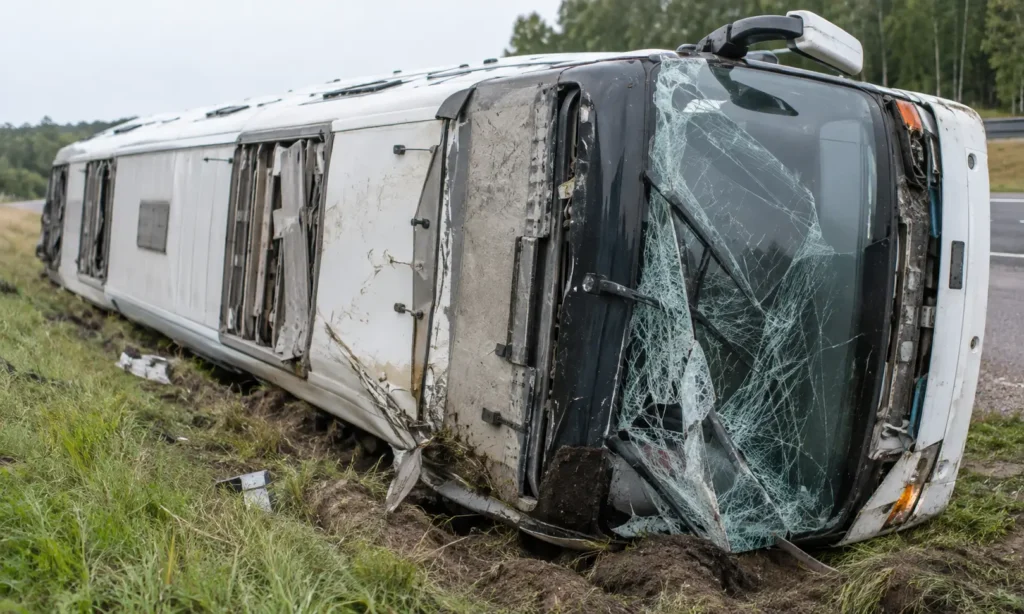
According to reporting based on the Wyoming Highway Patrol’s account, the vehicle crossed the median into the southbound lanes, left the highway, and rolled onto its side. No other vehicle was involved. Cowboy State Daily reported that 10 people were aboard, including Jackson. Four passengers were injured and five escaped without reported injuries.
The bus’s path across the highway made this a potentially much larger disaster. Authorities have not publicly established every step in the sequence, and the published reports do not identify a mechanical failure or reckless driving as the cause.
Who Was Injured, and Who Was the Driver?
Jackson, a Minnesota resident, worked in the touring music business as a driver and had also been involved in tour management. His death has prompted tributes from people who knew him through years of travel and performances. The Minnesota Star Tribune reported details about his background and the family members mourning his loss.
Four other occupants sustained injuries, although no complete medical breakdown of all four cases has been released. One crew member, Gabe Largaespada, publicly described receiving treatment for a forehead injury and recovering at home. It would be inappropriate to assume that every person aboard suffered similar injuries.
Hill was on the bus, but news coverage has not established that he personally sustained a specific physical injury. His statement focused on the loss of Jackson, the harm to members of his touring team, and the need for everyone involved to recover.
Was a Medical Emergency Involved?
One of the most significant developments concerns the driver’s condition immediately before the crash. Jackson’s daughter-in-law said the family had been told that he died before the vehicle rolled. She also discussed underlying medical conditions, while emphasizing that the precise medical event remained unknown.
Wyoming Highway Patrol described a possible medical condition as a contributing factor, according to local reporting citing patrol officials. That is not the same as a completed finding about the cause of the collision, the foreseeability of an emergency, or legal responsibility.
This distinction matters. A sudden, unforeseeable loss of consciousness presents very different questions from fatigue, distraction, impaired driving, equipment failure, or a known medical risk that was ignored. Until the investigation is complete, none of those alternative explanations should be asserted as fact.
Why Sawyer Hill Postponed His Remaining Shows
On October 20, Hill announced that the remaining North American concerts on his Everybody’s Home, Nobody’s Happy tour would be postponed. He said continuing the current run was not feasible while the band and crew needed time to process the tragedy and heal.
The decision affected multiple scheduled performances, including an October 30 appearance at George’s Majestic Lounge in Fayetteville, Arkansas. The Fayetteville Flyer published Hill’s announcement and confirmed the local cancellation.
Hill said his team was working on replacement dates. Existing tickets and VIP purchases were expected to remain valid for rescheduled shows, while fans who preferred not to attend could seek refunds through their points of purchase. Fans should consult Sawyer Hill’s official tour page or their ticket seller for subsequent changes rather than assume a new date has been finalized.
Why Overnight Tour Travel Deserves Attention
Tour buses allow performers and crew to travel between cities while transporting personal belongings and, sometimes, sleeping accommodations. Long-distance nighttime travel can help a tour reach its next venue, but it also means the vehicle is operating while passengers may be resting and highway conditions may change.
Nothing publicly established about this crash proves that driver fatigue caused it. Nevertheless, overnight transportation prompts useful questions about journey planning, backup drivers, safe stopping arrangements, rest periods, passenger restraints, and emergency exits. Those questions are important in touring operations generally, not findings against Hill’s team or the bus operator.
When a bus overturns, occupants may encounter abrupt changes in position, broken glass, dislodged objects, and challenges reaching an exit. The Federal Motor Carrier Safety Administration explains how federal occupant-protection requirements differ among motorcoaches and other types of buses, including standards involving restraints and emergency exits.
Could Driver Medical Certification Become Relevant?
U.S. federal rules require certain commercial drivers in interstate commerce to meet medical qualification standards. The FMCSA describes medical examinations and certification procedures intended to determine whether a person is physically qualified to operate a commercial motor vehicle.
That regulatory framework helps explain why a possible medical event would be relevant to investigators. The FMCSA medical program sets out general requirements, but the applicable rules depend on the driver, vehicle, and operation. Public reporting has not established a certification violation in Jackson’s case.
Investigators may examine licensing, medical documentation where lawfully available, vehicle information, and witness accounts. An existing medical condition, by itself, does not prove that someone knew an incapacitating episode was imminent or that a company failed its duties.
What Can Passengers Learn About Bus Safety?
The crash serves as a reminder that passengers should take travel safety seriously even when riding with an experienced professional. Occupants should learn where the available exits are, keep routes to doors and windows clear, secure loose belongings when possible, and use provided restraints in accordance with instructions and applicable rules.
The National Highway Traffic Safety Administration explains how seat belts help keep occupants within the vehicle during a collision and reduce ejection risks. Specific requirements and seating arrangements may vary by bus type, so general passenger-car statistics should not be treated as a precise estimate of what happened in this rollover.
Could the Crash Lead to Legal or Insurance Questions?
A serious crash involving a touring vehicle can create questions about liability, insurance, employment relationships, and compensation for injuries or loss of life. Possible issues may include who operated and insured the vehicle, what the transportation agreement required, whether regulatory duties applied, and what actually caused the incident.
Those are questions for evidence, not reasons to presume wrongdoing. A sudden medical emergency may be relevant to a negligence analysis, including whether it was foreseeable, but the result depends on state law and the circumstances. There is no basis in the available reporting to say that Hill or his team caused this accident or that any specific party has violated a safety rule.
Celebrity accident coverage can easily overstate responsibility before official findings emerge. Our previous coverage of Minnie Driver’s car accident in France similarly distinguishes a public account of a collision from conclusions that require a fuller investigation.
The Human Cost Behind the Headlines
Although Hill’s tour cancellation is a major entertainment headline, this story is fundamentally about a driver who died and a group of people affected by a traumatic event. Jackson’s family and colleagues have described his close connection to the music community. Local reports also describe efforts to support his relatives with travel and memorial expenses.
The weeks following a serious accident may involve medical appointments, grief, disrupted work, and decisions about when people feel ready to travel again. Those impacts are not always visible in concert announcements. Our article about Madison Bailey’s near-drowning while filming Outer Banks likewise explores how a frightening entertainment-industry incident extends beyond the moment itself.
What Happens Next?
As of October 27, 2026, the public record described by news outlets leaves the exact mechanism of Jackson’s reported medical emergency unresolved, and the full crash investigation has not been reported as complete. Additional official findings could clarify the sequence of events, while Hill’s team may separately announce future performance dates.
For now, the established facts are serious enough: a tour bus overturned, its driver died, four passengers were injured, and the remaining North American performances were postponed. The most responsible way to follow the story is to distinguish verified updates from speculation and give the people affected room to recover.
Final Thoughts
The Sawyer Hill tour bus crash illustrates the risks and consequences of road travel behind live entertainment. The loss of David Rollingcloud Jackson and injuries to passengers changed the course of the tour and brought attention to questions about commercial-vehicle medical fitness, passenger protection, and emergency response.
Those subjects deserve careful examination without treating an unfinished investigation as a verdict. CelebrityAccidents.com will continue to approach stories like this through confirmed reporting, meaningful safety context, and respect for the people involved.